Before We Talk About AI, Let’s Talk About Who We Are
AI Forward Summit Reflections

Before we talked about prompts, tools, or what Google Gemini can do, I wanted to start somewhere else.
With identity.
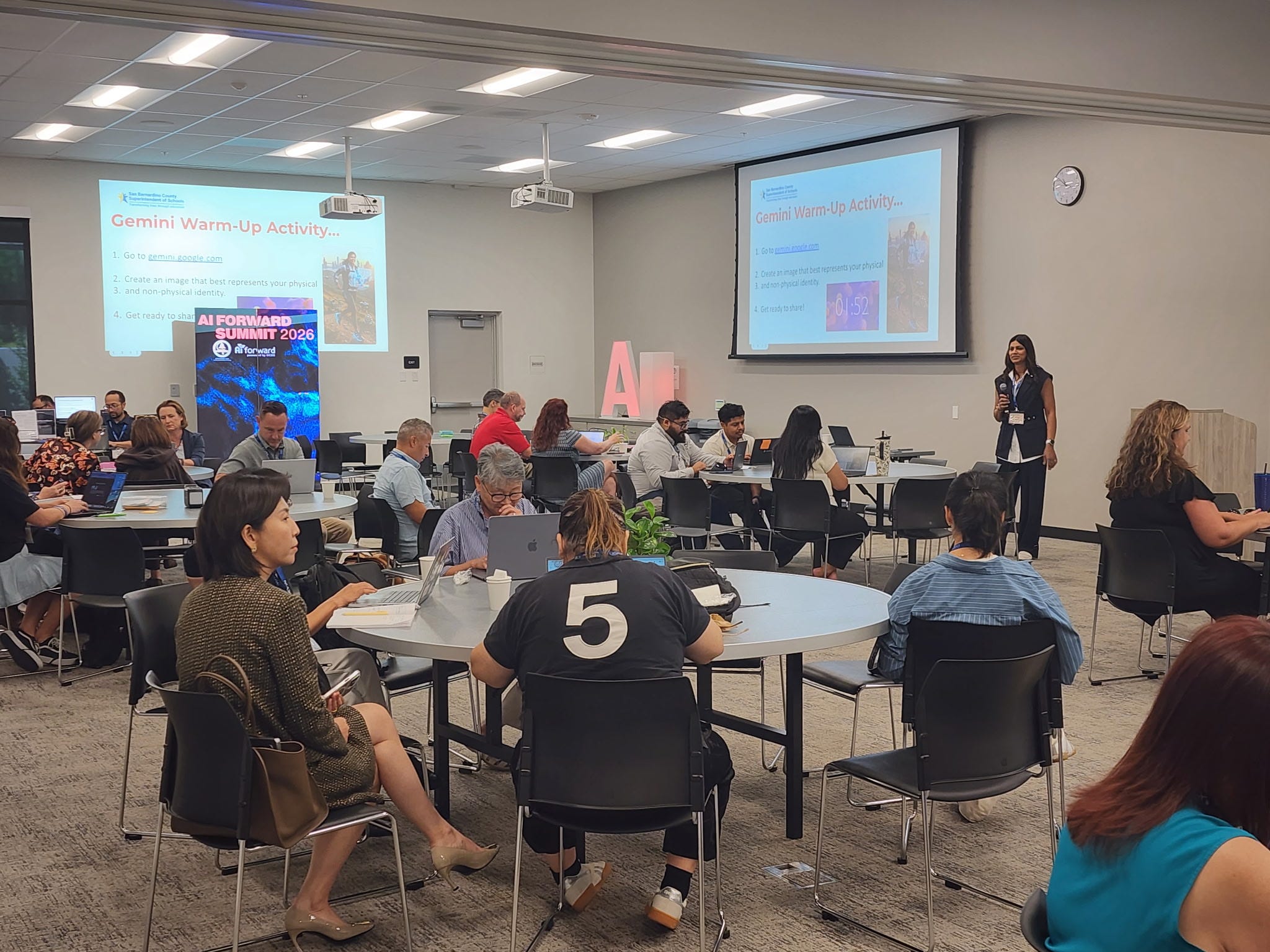
At last week’s AI Forward Summit, I invited participants to use Google Gemini to create an image of themselves that represented their physical and nonphysical identities: the experiences, values, cultures, roles, passions, and stories that make us who we are. They did not have to insert their picture. Folks became super creative.
Here was mine:

This image represents me beyond what you might see at first glance. I am a brown-skinned Indian woman. I am a runner and a hiker. I love to travel and experience new places. I am a dual citizen, shaped by three countries and cultures. And at the center of so much of who I am is my family.
These are pieces of my identity that influence how I see the world, how I lead, how I learn, and how I show up.
And that is exactly why I wanted to begin there.
Before we ask AI to create something for us, there is value in asking it to help us reflect on who we are.
Because before we ask what AI can generate, I think we need to remember who is doing the generating.
Every person enters these spaces with a story, an identity, a perspective, and lived experiences that shape how they engage with technology. If we are going to talk about the possibilities of AI in education, we cannot lose sight of the humans using it.
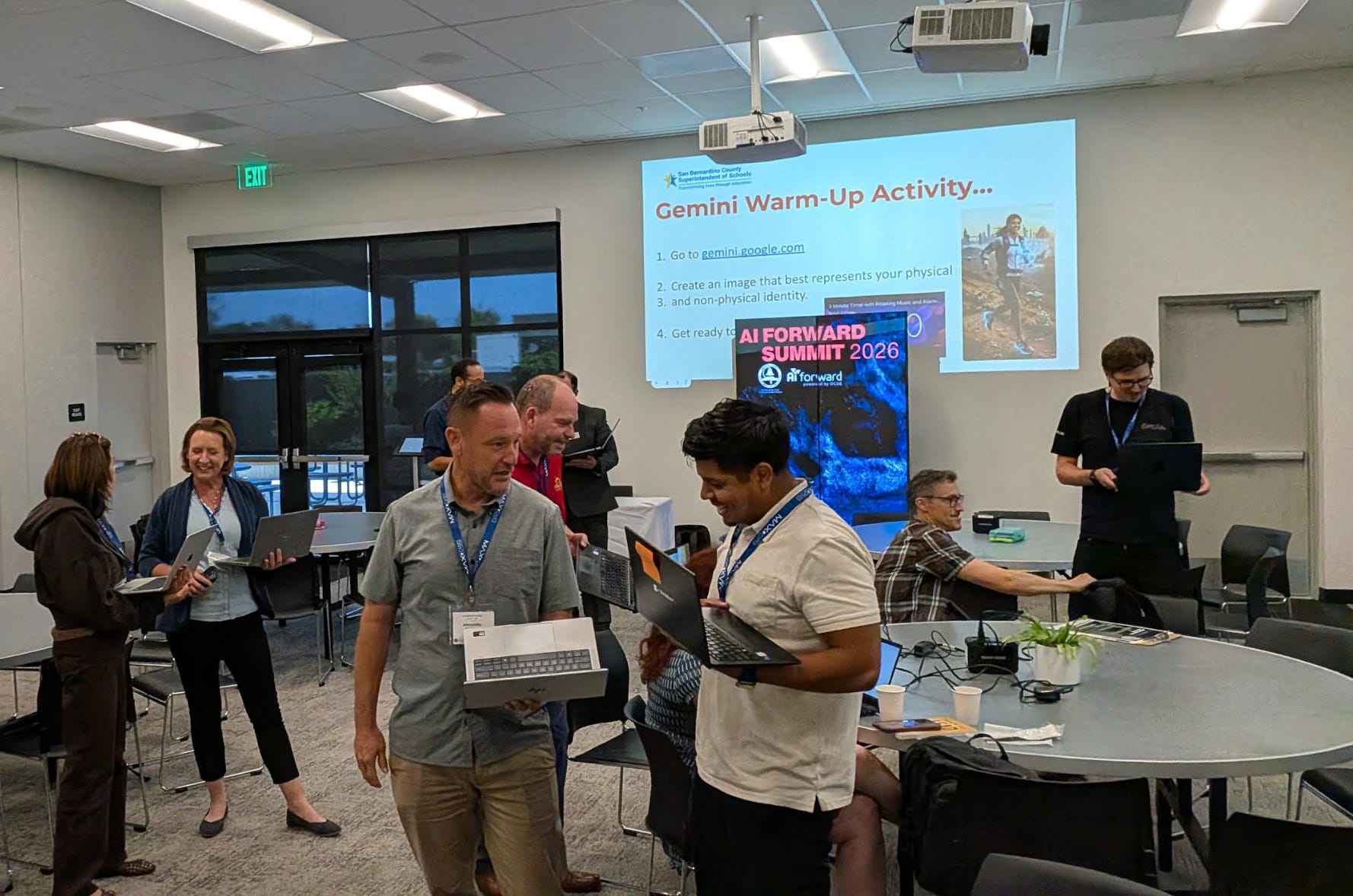
That message was reinforced throughout the AI Summit by Wes Kriesel, AI Education Lead at OCDE, and his emphasis on keeping humans at the center of this work.
That resonates deeply with me.
With all the excitement around what AI can do, I keep coming back to another question:
How do we make sure these possibilities are accessible to everyone?
During my session, I had the opportunity to share some of the possibilities of Google Gemini for Education, including something not everyone may know about: Google offers bite-sized, snackable digital learning opportunities that make exploring AI feel a little more approachable.
And I love that.
Because this moment can feel overwhelming. There is so much to learn, so much changing, and so many questions about what AI means for teaching, learning, and leadership.
That became especially real in a conversation with my friend Dr. Kieshauna Choice as we talked about higher education and what institutions are grappling with right now.
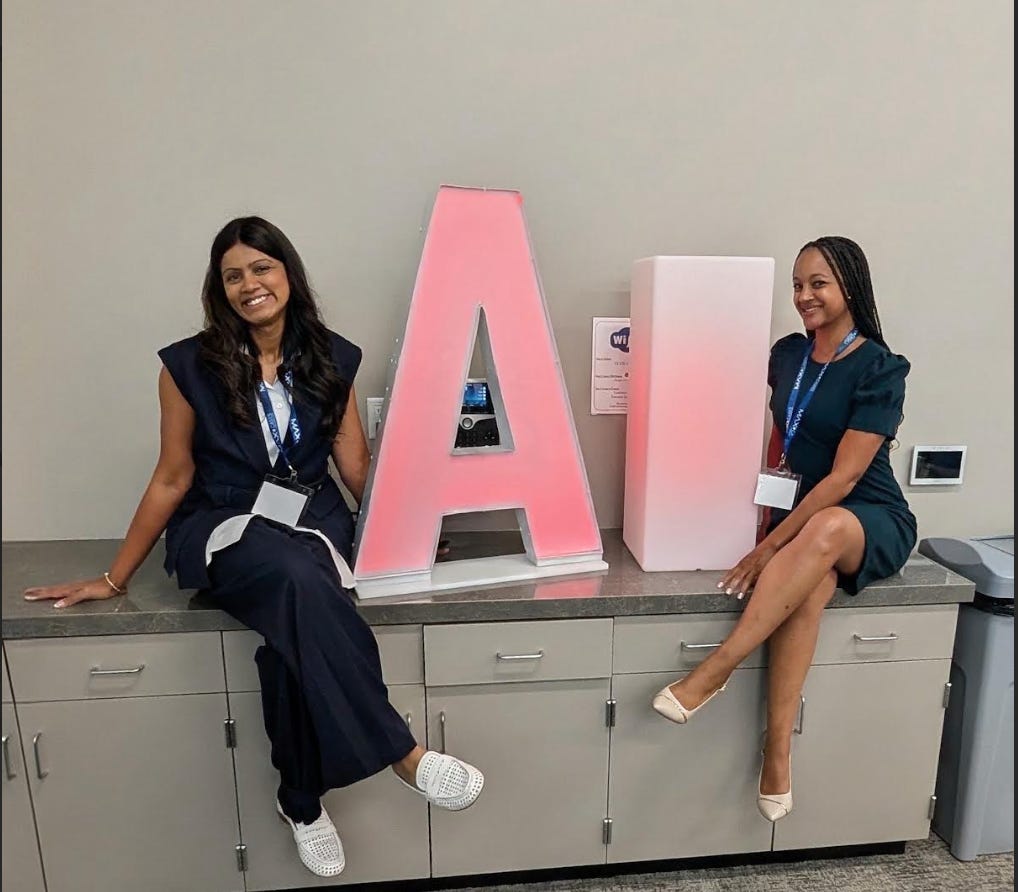
Where do we begin? How do we prepare educators? And perhaps most importantly, how do we make sure people aren’t left behind as AI continues to evolve?
For me, that last question matters.
Innovation should expand opportunity, not create another divide.
Building AI capacity doesn’t always require a massive initiative or knowing everything about AI. Sometimes it begins by giving someone an accessible entry point, the confidence to try something new, and the space to be curious.
A small bite. A conversation. A little curiosity.
And then we build from there.
Because this work has never really been about the technology for me.
It’s about people.
It’s about keeping humans at the center while using technology to expand access, opportunity, and what we believe might be possible.
If you haven’t checked out Google’s bite-sized training yet, you can find it here:
https://educertifications.google/
And if you’re thinking about what AI learning could look like for your educators, leaders, or organization, I’m always happy to support.
Sometimes, we just need a place to begin.
.
So glad you came and presented! Love these reflections!